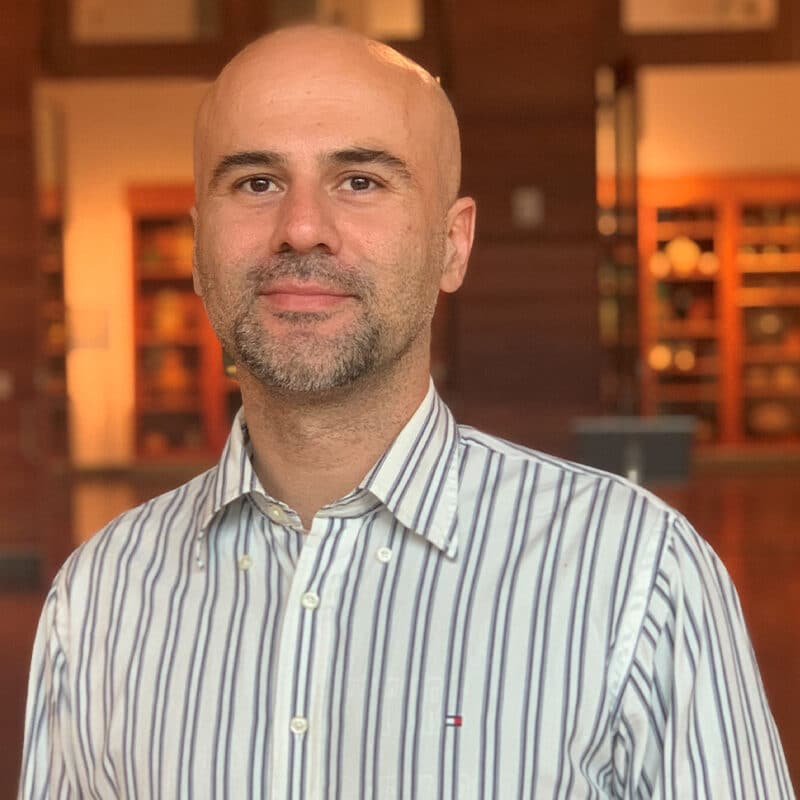
 Development Communications Intern Angelina Boughanem (Fall 2025) reached out to Foad Seyed Mohammadi, the Harn’s Multimedia Specialist, to learn more about his role at the Harn and his extensive photography career. Foad has not only contributed greatly to photographing the Harn’s online collection and community events, but he also brings an expert and inspired outlook to art and digital work. Read below to learn more about his insightful perspective!
What inspired you to pursue a career in photography and how did your passions lead to working within a museum setting?
My journey in photography began around 2005 with documentary work. It was my way of connecting with people—listening to their stories, sharing their emotions and capturing the beauty and struggle of everyday life. Walking through streets and bazaars, my camera became both a bridge and a witness to human experience.
After earning my MA in Art, I began teaching and later worked in a museum, photographing archaeological objects across Iran. Those years gave me the chance to travel, to hold history in my hands and to feel the wonder of seeing something uncovered after thousands of years. Each artifact carried a silent story linking the ancient and the modern.
I’ve always been drawn to moments filled with quiet tension and emotion—the chaos and tenderness of human life. Photography, for me, is not just documentation but interpretation—a way to translate feeling into form. That same passion for storytelling and connection naturally led me to the museum world, where history, art and humanity meet.
What does a typical day working as the Harn’s Multimedia Specialist look like?
When I started working at the Harn Museum in July 2021, only about 2% of the collection was digitized. By the end of July 2025, I had photographed around 12,000 objects—covering nearly 80% of the collection.
A typical day as the Harn’s Multimedia Specialist involves photographing both 2D and 3D objects, editing and preparing the images for various purposes such as education, publications, digital exhibitions and promotional materials. My work ensures that the museum’s collection is accessible and visually represented at the highest quality.
In addition to collection photography, I also handle most of the museum’s photography and videography projects—capturing key events like Museum Nights, Art After Dark and other special programs. Each day brings a new creative challenge, blending technical precision with storytelling to share the museum’s art and experiences with a wider audience.
What are some unique challenges or differences that come with photographing artworks and museum exhibitions that people may not expect?
Lighting is often the biggest—artworks are sensitive, so I must find ways to capture true color and texture without harming the piece. Each object has its own surface, tone and presence that demand careful attention.
Exhibition photography adds other difficulties—reflections, mixed lighting and limited space. Yet these challenges make the work meaningful. It’s about translating the spirit of an artwork into an image, balancing accuracy with emotion and creating a visual bridge between the object and the viewer.
Do you have a favorite artwork from the Harn? Maybe one that you have photographed?
It’s hard to choose a single favorite artwork at the Harn because I genuinely enjoy photographing and working with almost every piece. Each object has its own story, presence and energy. But some works hold a special place in my heart—especially pieces by Pablo Picasso, Marc Chagall and Albrecht Dürer, as well as photographs by Jerry Uelsmann.
I still remember seeing these artists’ works in books back in 2001 in Iran. At that time, I could never have imagined that one day I would see those same pieces in person—let alone photograph them. Twenty years later, around 2022, I had the chance to work with some of these artworks and even touch the very paper those artists had once touched while they were alive. It was an unforgettable moment that made history feel deeply personal.
I also remember seeing a Jerry Uelsmann image in a photography book that mentioned the Harn Museum collection. Years later, finding myself working here and standing in front of that very same artwork was a beautiful and unexpected full-circle moment.
Does working in an art institution influence your creative process, inspirations or aspirations?
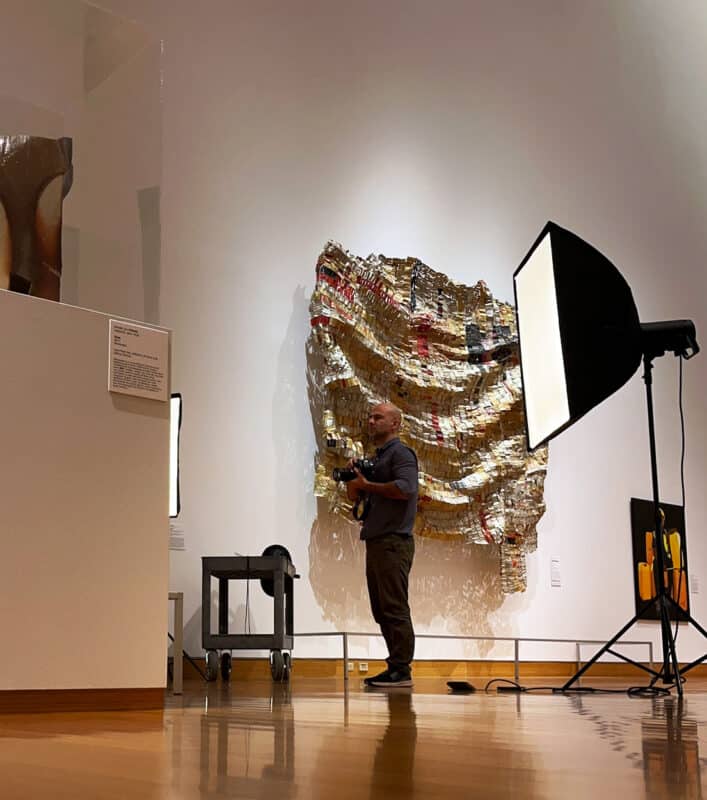
Absolutely. Being surrounded by masterpieces and historical artifacts constantly reminds me of the possibilities of visual storytelling and encourages me to think more critically and creatively about composition, light and narrative in my photography.
It also inspires me to explore connections between the past and present, human experiences and cultural contexts. Witnessing how artists express ideas and emotions motivates me to experiment and take risks in my own work. In many ways, working at the museum has expanded not only my technical skills but also my artistic imagination and aspirations.
You can explore the majority of artworks that are part of the Harn’s collection online, an extensive database that Foad helped digitize for public access!